

 +33(0)1 58 02 00 30


Where expertise creates value in dry food processing
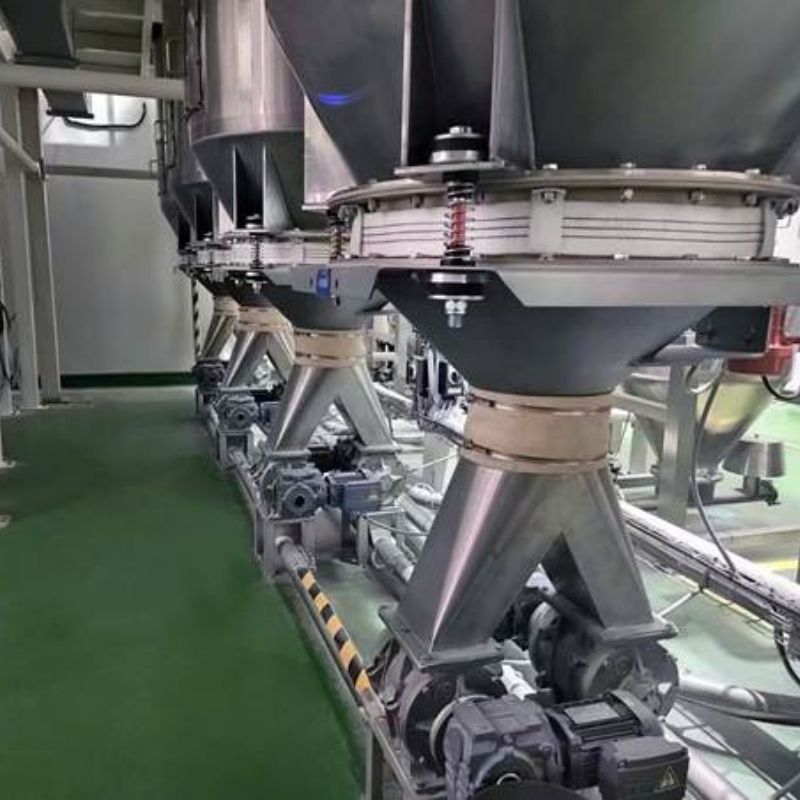
For manufacturers operating in sectors such as flour milling, bakery premixes, sugar, cocoa, spices, dairy powders, additives, breakfast cereals, plant-based ingredients and nutritional blends, every transition point matters. Product quality, hygiene, traceability and line efficiency all depend on how well each stage of dry material handling has been designed.
This is where WAMGROUP’s long-standing expertise in specialised system components makes a measurable difference.
For almost six decades, WAMGROUP has supported the food industry with engineered solutions that combine process reliability, hygienic design and global application know-how. The company’s strength lies not only in the breadth of its components portfolio, but in its ability to understand the process logic of dry food production from start to finish. From the first intake of raw materials to the final buffer hopper before packaging, WAMGROUP systems are designed to keep powders and granules flowing safely, consistently and efficiently.
Where the process begins
Every dry food process starts with raw materials. Whether the plant receives flour by tanker, sugar in big bags, cocoa in sacks or micro-ingredients in drums, the first critical challenge is preserving product integrity from the moment it enters the facility.
At this stage, WAMGROUP combines dust-free unloading equipment, reliable interception and safe storage into a coherent system architecture. Silo filling solutions, dust collection units, pressure relief devices, level monitoring components and silo safety systems work together to ensure clean and safe environment.
The market reality is clear: food manufacturers are under increasing pressure to reduce waste, improve traceability and shorten cleaning cycles. As recipes become more complex and SKU proliferation continues, raw material management must be more agile than ever.
Smart discharging: protecting flow at the source
Once stored, dry raw materials must be discharged with precision and consistency. This is often where hidden inefficiencies emerge.
Bridging, rat-holing, inconsistent refill behaviour and product segregation can all undermine downstream accuracy. In food processing, these issues quickly translate into recipe deviations, batch inconsistency and costly rework.
WAMGROUP addresses this stage through a range of specialised discharging aids, bin activators, live-bottom devices, fluidisation systems and vibration technologies designed to maintain stable mass flow.

Stable discharge is where process continuity begins: specialised Bin Activators BA eliminate bridging, protect recipe accuracy and restore rhythm across the line.
The storytelling in many successful food plants follows a similar pattern: the visible improvement in productivity often begins with solving a seemingly simple discharge problem.
A flour premix producer, for example, may initially focus on mixer cycle times, only to discover that the true bottleneck lies upstream in irregular silo discharge. Once stable extraction is restored through the correct combination of bin dischargers and screw feeders, the entire process downstream—from dosing to mixing—regains rhythm.
This is where WAMGROUP’s market-oriented approach stands out. Rather than viewing discharge as an isolated function, the company engineers it as part of a larger material journey.
Interception and conveying: the backbone of dry food efficiency
In modern dry food plants, conveying is far more than transportation. It is the backbone that connects process islands into a scalable, traceable and hygienic production flow.
WAMGROUP’s mechanical conveying technologies—including tubular and trough screw conveyors, bucket elevators and chain conveyors—are widely used to move ingredients gently and reliably across the plant.
The choice of the most convenient conveying system depends on the specific material to handle.
Fine flour requires dust-tight handling and contamination control. Sugar crystals demand careful movement to prevent degradation. Fragile cereal inclusions or dehydrated ingredients need gentle transfer with minimal breakage. Sticky dairy powders may require special finishes and optimised screw geometries.
This is where decades of know-how become strategic.
WAMGROUP’s expertise in screw conveyor design, shaftless options, modular trough systems, quick-clean access and wear-resistant materials enables food processors to tailor the conveying stage to both product characteristics and plant layout.

TXF Tubular Screw Feeders and V2FS Butterly Valves transform individual machines into a connected, traceable and scalable dry food production flow.
From a market perspective, manufacturers increasingly seek systems that can adapt to shorter production runs and faster changeovers. Flexible and modular conveying layouts and compact installation footprints help make that possible.
Equally important is interception: butterfly valves, diverter valves, slide gates, rotary valves and flow control devices that direct product accurately between lines, day bins, sifters, mixers and packaging buffers.
In a high-mix food production environment, these transition points are where traceability and contamination prevention are won. WAMGROUP components are designed to maintain airtight sealing, clean switching and repeatable routing, supporting both food safety and production agility.
Feeding and metering: where recipe accuracy becomes brand value
The dry food sector lives and dies by consistency.
Consumers expect the same texture, flavour, colour and nutritional profile every time they open a pack. That consistency begins in the feeding and metering stage.
WAMGROUP has built a strong reputation for precision screw feeders, micro-batch feeding systems, rotary feeders capable of handling both macro and micro ingredients.This is especially relevant in applications involving enzymes, vitamins, flavourings, improvers, salts, fibres and functional additives, where even small deviations can affect performance, compliance or sensory quality.
The market trend towards fortified foods, plant-based formulations and customised blends has made accurate dosing more important than ever.
Here, WAMGROUP combines mechanical precision with application-specific design. Variable pitch screws, easy-clean hoppers, anti-segregation geometry and hygienic quick-release mechanisms help operators achieve repeatable feed rates even with difficult powders.
In journalistic terms, this is the moment where engineering meets brand promise.

At the feeding stage, engineering precision becomes product consistency—ensuring every recipe delivers the same taste, texture and nutritional value.
A breakfast cereal producer launching a protein-enriched line cannot afford inconsistency in micronutrient addition. A bakery ingredient supplier managing allergen-sensitive recipes requires absolute repeatability and secure ingredient separation. In both cases, specialised feeding components are not simply technical accessories—they are central to market credibility.
Mixing technology: enabling homogeneity with process intelligence
The mixer may be the heart of the line, but its performance depends heavily on what happens before and after it.
WAMGROUP’s role in this stage is often underestimated. Feeding consistency, timed ingredient release, pneumatic interception, venting and dust filtration all contribute directly to blend homogeneity and cycle efficiency.
The company’s components support batch and continuous mixers across sectors such as premixes, powdered beverages, soup bases, dairy formulations and seasoning systems.
The real value lies in process intelligence.

MAP® Batch Mixers WBH are essential to blend homogeneity, faster changeovers and reduced batch variability.
By ensuring stable upstream feed, clean valve sequencing and controlled discharge into the mixer, WAMGROUP helps manufacturers reduce variability between batches and shorten validation times during recipe changes.
As the market moves towards more frequent product launches and niche formulations, this operational flexibility becomes a competitive advantage.
The story is no longer about producing one standard recipe efficiently. It is about switching between many recipes confidently.
Final storage and shipping: safeguarding the last metre
Before product reaches the shipping or the packaging line, there is one final critical step: secure intermediate storage.
Surge hoppers, day bins and buffer silos positioned ahead of filling and packing systems must maintain stable flow while protecting the blend from contamination, segregation and humidity ingress.
This final metre of material handling is often decisive for OEE.
WAMGROUP’s final storage solutions are engineered to support packaging performance through reliable discharge equipment, accurate level management and optimised silo and bin vents.

WAMGROUP® TOREX® Loading Bellows for transferring powder or granular materials from final storage silos to trucks, tankers or ships without dust emissions
For food manufacturers under pressure to increase throughput without expanding footprint, this stage becomes a strategic leverage point.
Well-designed final storage and discharging systems can decouple upstream batch variability from downstream packaging speed, allowing the plant to run more smoothly even during peak demand periods.
More than components: a global partner for dry food growth
What makes WAMGROUP particularly relevant to the dry food sector is not only the range of specialised components available, but the company’s ability to translate decades of field experience into practical system thinking.
Across global markets, dry food manufacturers are facing the same structural pressures: labour efficiency, energy optimisation, traceability, hygienic compliance, product diversification and shorter time-to-market.
These challenges cannot be solved by isolated equipment choices.
They require process continuity.
This is precisely where WAMGROUP’s expertise has been built—managing the full material process from initial storage and handling, raw material discharge, interception and conveying, through feeding, metering, mixing support and final storage before packaging.
The result is a process journey defined by confidence: cleaner product transfer, better recipe accuracy, improved uptime, faster cleaning and scalable plant performance.
In a sector where product quality and operational efficiency directly shape brand reputation, specialised system components have become strategic assets.
For WAMGROUP, this has long been the recurring theme.
Not simply moving dry materials, but enabling food manufacturers to grow with reliability, consistency and market-ready agility.
That is how expertise becomes value.


